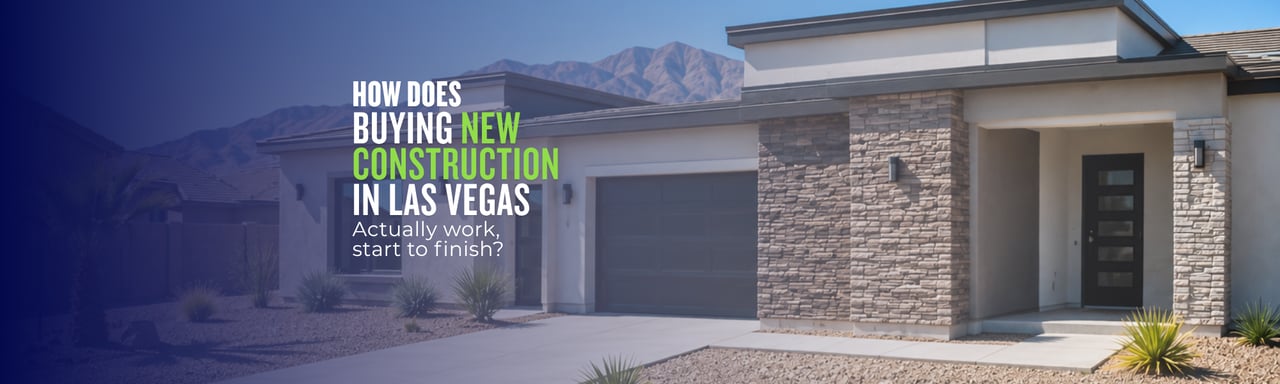
How Does Buying New Construction in Las Vegas Actually Work, Start to Finish?
Sherwyn Colonia | NVRE License #S.185645 Ferguz Colonia | NVRE License #S.199036 FIV Realty | (702) 234-5985 | thecoloniateam.com Serving Summerlin, Henderson, Green Valley Ranch, and the greater Las Vegas Valley
Yesterday we covered how to compare mortgage lenders. Today's question comes up constantly from buyers drawn to new construction in Summerlin, Henderson, or the Northwest corridor: the process looks similar to buying a resale home from the outside, but it works differently in almost every meaningful way once you're actually in it.
Step One: Choosing a Builder and a Community
This starts like any home search, but the comparison points are different. Beyond price and location, you're comparing builder reputation, warranty terms, standard included features versus paid upgrades, and how far along the community is in its build-out — an early-phase community may mean more choice in lot and floor plan but a longer wait; a later-phase community means faster move-in but less selection. Bring your own agent to this stage, not after. The person at the builder's sales desk represents the builder, not you, and having your own representation from the first visit costs you nothing in most cases while protecting your interests throughout.
Step Two: The Deposit and Reservation
Once you've chosen a lot and floor plan, builders typically require a deposit to reserve it — commonly in the 5%-10% range of the home's base price, though this varies by builder and can be split between an earnest money deposit and a separate options/upgrades deposit. On a $500,000 home with a 5% deposit, that's $25,000 to lock in your lot, on top of any lot premium. This deposit is often less protected than an earnest deposit on a resale home, so understanding exactly what triggers a refund versus a forfeiture — before you sign anything — matters more here than in a typical resale transaction.
Step Three: The Builder Contract
Once you sign, you enter a ratified contract that looks different from a standard resale purchase agreement. These contracts frequently include language allowing price or timeline adjustments tied to material costs, supply disruptions, or municipal requirements — protections that favor the builder more than a standard resale contract would. Review completion timelines, escalation clauses, and change-order pricing carefully, and don't assume anything is fixed just because it's printed. This is exactly the stage where an experienced buyer's agent or, in some cases, a real estate attorney earns their fee — catching a clause that could cost you thousands later.
Step Four: Design Center Selections and Upgrades
This is where new construction pricing often grows well beyond the advertised base price. You'll typically meet with a design consultant to select finishes — flooring, countertops, cabinetry, fixtures — and it's easy to walk out having added tens of thousands of dollars in upgrades without quite realizing the running total. Ask for structural upgrades (which affect resale value more) versus purely cosmetic ones, and know that some upgrade pricing has more room to negotiate than builders let on, particularly during slower sales periods.
Step Five: Construction and Timeline
Depending on the builder and whether you're buying a spec home (already under construction or complete) versus a to-be-built home, completion can range from a few months to 12-24 months. Framing typically takes 3-5 weeks after a foundation cures for 2-4 weeks; mechanical rough-ins (electrical, plumbing, HVAC) take another 2-3 weeks; exterior finishing adds several more weeks after that. Material and permit delays are common enough that builders provide estimated, not guaranteed, completion dates — plan your own move timeline with real flexibility built in, especially if you're also selling a current home and need the timing to line up.
Step Six: Walkthrough, Inspection, and Closing
Before closing, you'll do a pre-closing walkthrough to identify any items needing correction before you take possession — this is a genuinely important step, and having your own agent (or, for larger issues, an independent inspector) present matters, since the builder's team runs this walkthrough and has an obvious interest in moving quickly toward closing. New construction still typically comes with a builder warranty on major systems, which is a real advantage over resale, but knowing exactly what it covers and for how long is worth confirming before, not after, you need to use it.
The Financing Timeline Runs on a Different Clock
Because completion dates shift, financing for new construction needs more coordination than a resale purchase. You'll generally need pre-approval before signing the builder contract, and your rate lock timing has to account for a construction timeline that may run longer than a standard 30-45 day resale closing — a lender unfamiliar with new construction can lock your rate too early (forcing a costly extension) or too late (leaving you exposed to rate movement). This is exactly why lender experience with builder-required timelines, which we covered yesterday, matters specifically for new construction purchases.
Tomorrow: What renters in Las Vegas should know before signing a lease.
This post reflects general industry practices as of publication and is not legal or financial advice. Builder contracts, deposit structures, and timelines vary by builder and community — review your specific contract with a qualified professional. Speak with Sherwyn or Ferguz Colonia for guidance specific to your situation.
Sherwyn Colonia, NVRE License #S.185645 | Ferguz Colonia, NVRE License #S.199036 FIV Realty | (702) 234-5985 | thecoloniateam.com This is not intended to solicit properties currently listed for sale. Equal Housing Opportunity. All information deemed reliable but not guaranteed. We are committed to compliance with the Fair Housing Act and the Nevada Real Estate Division's licensing and advertising regulations.